Skip to content

Ashwagandha

Withania somnifera · winter cherry · the root

In short

  • Part used: the root, dried.
  • Grows: wild in dry regions from the Canary Islands and the Mediterranean through Africa and the Middle East to India, Sri Lanka and China. Mostly cultivated in India.
  • Historical use: strength and wasting, potency and fertility, fever and breathing, wounds and swellings, joints, sleep and the nerves.
  • Can be used for: no approved use in the EU. Canada approves it, among other things, as an adaptogen, for more energy and resistance to stress.
  • Main substances: withanolides, alkaloids and sitoindosides.
  • The research: many small studies find less stress. The pooled analyses call the evidence weak.
  • Suitable for: adults from 18, according to Canada, especially the weak and tired. Not for pregnant or breastfeeding women, or people with liver or thyroid disease.
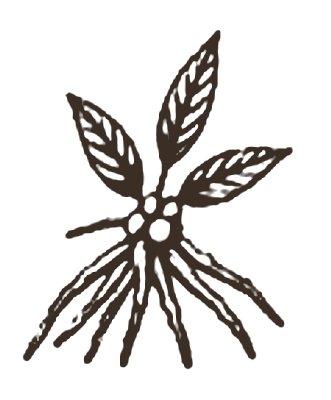
Line drawing of Ashwagandha

It smells of horse. That’s what its name means.

One name says strength. The other says sleep.

The name is Sanskrit, and it’s about horses.

An Indian medical book from 1926 says it straight out: the root smells of horse, and that is why it is called ashwagandha. The World Health Organization describes the smell the same way. A laboratory that tests the plant today uses the horse smell to recognise it.

Rolv.no reads more into the name: the smell and the strength of a horse.

The Latin name points somewhere else entirely. Linnaeus described the plant in 1753 and gave it the species name somnifera. It means sleep-inducing.

One plant, two names. The rest of this page is about which of them is right.

The plant

A shrub that wraps its berries in paper.

The horse lives in the root. The rest of the plant looks fairly innocent.

Ashwagandha is an evergreen shrub, up to two metres tall. The flowers are small and yellow-green. The berries are red and sit inside an inflated, papery husk. Collectors in South Africa write that the leaves smell strongly of green tomatoes. The plant belongs to the nightshade family.

The root is thick and fleshy. In India it is harvested in winter, when the leaves wilt and the berries are ripe. The roots are washed, cut into pieces and dried.

It grows wild in dry regions from the Canary Islands and the Mediterranean, through Africa and the Middle East, to India, Sri Lanka and China. Most of it is cultivated in India. In Norway it cannot survive the winter outdoors, but it can be grown as a pot plant.

The seeds curdle milk, just like those of its relative Withania coagulans, which is used to make cheese.

And the plant is old in the tombs. Its fruits lay in a floral collar in the innermost coffin of the pharaoh Tutankhamun.

The wrong plant in the bag

Right plant. Wrong part.

The root is the expensive part. That is where the trouble starts.

In 2018, dried root in India cost three to ten times as much as dried leaves. An American laboratory tested 584 root samples. One in five was not pure root, and most of those contained leaves. Indian researchers analysed ten extracts labelled “made from root”. Eight contained parts from above ground.

In 2026, American researchers tested 25 supplements on sale. Only two could be confirmed as made from root. The rest contained leaf and stem, declared or not.

A DNA test doesn’t help. Root and leaf have the same DNA.

Sometimes it is a different plant altogether. Roots of moringa and fenugreek, among others, have been found in extracts sold as ashwagandha.

The leaf is not dangerous, according to those who exposed the cheating. But the leaf is not the root. It has more than a hundred times as much of the substance withaferin A.

Historical use

Mostly strength. A little sleep.

So what was the root used for, before it ended up in capsules?

The plant grows wild in Africa, Asia and southern Europe, and people have used it where it grew. The order is not a ranking. The oldest Indian texts have no certain dates, so the dates below are their editors’.

Strength and wasting

  • India, Charaka Samhita, around 1000 BC according to its editors: among the ten remedies that give strength, and among the ten that build up the body.
  • India, Sushruta Samhita, finally edited in the second century BC: for wasting, together with milk, butter and meat. For consumption, milk boiled with the root was given to build the body up.
  • India, 1926: for consumption, wasting in children and weakness in old age. As nourishment for pregnant women and the elderly.
  • India, the pharmacopoeia: for consumption and weakness.
  • Disagreement: PROTA writes that it is hard to establish that the plant in the old Ayurvedic texts really is Withania somnifera.

Potency and fertility

  • India, Sushruta Samhita: in a butter preparation with many plants for childlessness in women.
  • India, 1926: root powder with ghee and honey for impotence, taken in the evening and followed by milk. A decoction boiled with milk and ghee for childlessness in women.
  • India, 1935: in Unani medicine strengthening, an aphrodisiac and an aid to conception. In Punjab considered an aphrodisiac.
  • Africa, undated: root powder in milk as an aphrodisiac.
  • South Africa, 1932 and later: the Sotho of the Transvaal gave a root decoction to strengthen the womb in women who often miscarried. The root has also been used to increase fertility after miscarriages.
  • Disagreement: the same root has been used for the opposite. In Sind it was used to bring on abortion, and in Africa it is listed as an abortifacient. PROTA points out the contradiction itself.

Fever, cough and breathing

  • Somalia, undated: a root decoction for children with fever and disturbed sleep, such as nightmares.
  • Ethiopia, undated: for cough, asthma and epilepsy.
  • Madagascar, undated: a tea of the plant for asthma.
  • South Africa, 1932: the Sotho drank a root decoction for colds and chills. The Xhosa gave a decoction of the root bark for asthma and chest complaints. The Zulu gave an enema of the root to infants with fever.
  • India, 1926: root and bitter leaves for breathlessness in emphysema.
  • India, 1935: a tea of the leaves for fever.

Wounds, skin and swellings

  • India, Sushruta Samhita: poultices on swellings, and in plugs meant to make wounds heal.
  • India, 1926: the root applied to stubborn sores and rheumatic swellings. Powder in oil on the skin for skin disease.
  • South Africa, 1932: an ointment of leaves boiled in fat on wounds. Europeans in the Free State put a leaf paste on erysipelas.
  • South Africa, 1948: a herbarium label from the Eastern Cape explains that the underside of the leaf “draws” and the upper side “heals”.
  • Africa, undated: powder of leaf or root boiled with fat, as an ointment on wounds and boils.

Joints and pain

  • India, 1926: for rheumatism. Powder with sugar candy in ghee for pain in the lower back.
  • India, 1935: the Rajputs used the root for rheumatism, and in Punjab it was used for pain in the lower back.
  • Mauritius, undated: a poultice of fresh leaves and roots on rheumatic joints.

Sleep and the nerves

  • Roman Empire, 1st century: Dioscorides describes a shrub with sleep-inducing root bark, milder than the poppy.
  • Linnaeus, 1753: the species name somnifera, sleep-inducing.
  • The Lancet, 1886: an alcoholic preparation gave good sleep in emphysema, alcoholism and tuberculosis.
  • India, 1926: root and bitter leaves as a sleeping remedy in alcoholism. The root for nervous exhaustion and poor memory.
  • India, 1935: in Ayurveda for insomnia.
  • South Africa, undated: an alcoholic extract for sleep in alcoholism, tuberculosis and emphysema.
  • Disagreement: Dioscorides’ shrub has large red flowers. Ashwagandha has small yellow-green ones. The translator of Dioscorides suggests other plants in the nightshade family. Sprengel thought it was ashwagandha.

It is often said that ashwagandha has been used for stress for thousands of years. The word stress does not appear in the old sources on this page. The closest is an Indian medical book from 1926, which mentions nervous exhaustion and overwork.

Can be used for

Canada says yes. Denmark says no.

What do the authorities say today? They disagree.

  • EU: no approved use. The EU’s expert committee tried in 2013, but found too little to describe the preparations, and no evidence of thirty years of use, fifteen of them in the EU.
  • World Health Organization: only one use is supported by clinical data, as an anti-stress agent to improve reaction time. The pharmacopoeias describe a general tonic for more energy, especially for athletes and the elderly.
  • India: consumption, weakness, vata diseases, swellings and impotence, in the Indian pharmacopoeia.
  • Canada: traditionally used in Ayurveda as a rejuvenating tonic, for weakness after illness and in old age, for restlessness and nervousness as an aid to sleep, and for memory. And as an adaptogen, for more energy and resistance to stress over time.
  • France: the root is on list B of the French pharmacopoeia, of plants whose possible side effects outweigh the expected benefit.
  • Denmark: illegal to sell. The Danish food agency points to effects on sex hormones, metabolism, the immune system and the nervous system.

Who it suits

Made for the weak. Advised against for many.

The root has been used to build the body up. But who does it suit?

Who can use it

  • The authorities: adults from 18, says Canada. Both Canada and the WHO mention the weak and the elderly.
  • Herbalists: the British herbalist Simon Mills writes that the root has a reputation for helping in long-term illness and exhaustion. An Indian medical book from 1926 mentions nervous exhaustion and overwork.
  • Plant databases and experience: PFAF mentions nervous exhaustion, insomnia and help after a long illness. rolv.no writes that in the West it is mostly used to get the elderly and the chronically ill back on their feet.
  • Research: most studies have been done in adults with stress or sleep problems.

Who it doesn’t suit

  • Pregnant and breastfeeding women: the WHO says no, because the root has been used to bring on abortion. The US National Institutes of Health (NIH), France and Germany also advise against it. Canada says: ask a health professional first.
  • Children and teenagers: Canada says from 18. Germany advises against it for children, and France under 18, as a precaution.
  • Liver disease, now or in the past: Germany, France and Australia advise against it. The American liver database LiverTox refers to rare deaths, mostly in people who already had liver disease. Mills also advises against it for people who take paracetamol regularly.
  • Thyroid and autoimmune disease: the NIH advises against it. France advises against it in thyroid disease.
  • Heart disease or too much male sex hormone: France advises against it. The NIH advises against it in hormone-sensitive prostate cancer.
  • Before an operation: the NIH advises against it.
  • Sleeping pills, sedatives or epilepsy medicines: the WHO, the NIH, France, rolv.no and PFAF warn against combining them. The NIH also mentions medicines for diabetes, high blood pressure and the thyroid, and medicines that suppress the immune system.

Where the sources disagree

  • The elderly: Canada and the WHO mention the elderly. Taiwan requires the pack to say that it is not suitable for young children, pregnant women, the elderly and people with a weak stomach. The rule covers water extracts of leaf and root.
  • Pregnancy: in South Africa the Sotho gave the root to strengthen the womb in women who often miscarried. The Indian medical book from 1926 recommends it as nourishment for pregnant women. Animal studies in rats have shown no harm to the offspring. The WHO still says no.
  • Breastfeeding: in Ayurveda it is sometimes used to increase milk. The American database LactMed says breastfeeding mothers should avoid it, because no one has studied it.
  • Liver: Mills writes that in Ayurveda the root has a reputation for helping in liver disease too. Today it is advised against in exactly that case.
  • Canada and the others: Canada lists no groups who should avoid it, and no warning about the liver or the thyroid. The NIH, France and Germany list many.
  • Dependence: PFAF writes that it can cause dependence. None of the other sources here mention it.

What’s in the plant

Lots of names. No answer key.

What is it in the root that has been given so many jobs?

  • Withanolides: substances built like steroids. They are considered the most important, and extracts are measured by them.
  • Withaferin A: one of the withanolides. The leaf has more than a hundred times as much as the root.
  • Withanosides: withanolides with sugar attached. They were first found in the root.
  • Alkaloids: among them anaferine, isopelletierine and tropine. These were what researchers looked at first.
  • Sitoindosides: a group of saponins from the root.
  • Sugars: fructose, glucose and sucrose make up more than 30 per cent of an alcohol extract of the root.

Which substance works?

Not necessarily the one on the label.

Six groups of substances. Which of them does the work?

Nobody knows, according to the American liver database LiverTox. The withanolides are suspected.

In 1911, two chemists thought the only thing that could work was a volatile oil. It makes up six thousandths of one per cent of the root.

In 2015, researchers tested a water extract of the root on receptors for GABA, the brain’s own braking signal. The extract switched them on. Withaferin A and withanolide A on their own did not. The researchers think other substances in the root are responsible.

The World Health Organization describes something similar. A fraction of the root extract with no withanolides at all worked against stress in mice and rats.

And in 2025, Austrian researchers measured withanolides in 19 products. The content differed from what the label said, by a factor of two to thirty-five.

Extracts are measured by their withanolides. It is still not known whether it is the withanolides that do the work.

What the research says

The blood tests say yes. People are less sure.

The studies below used extracts in capsules, not the root as tradition used it.

In 2012, 64 adults in India with long-term stress were given either root extract or a dummy pill for 60 days. With the extract, the stress hormone cortisol fell by more than a quarter. With the dummy pill, it fell by less than a tenth. The extract was supplied by the company that makes it.

In 2023, 120 adults in Australia with stress and fatigue were given root extract or a dummy pill for twelve weeks. Their stress fell, but just as much with the dummy pill. Their fatigue eased. The study was paid for by the company that makes the extract.

In 2026, 1,200 healthy Indians were given root extract or a dummy pill for 24 weeks after their COVID vaccine. The study was paid for by the Indian state. Side effects were as common as with the dummy pill, mostly mild stomach complaints. No effect on the immune system could be shown.

The pooled analyses pull in different directions. One from 2022 combined twelve studies with around a thousand participants and found less stress and anxiety, but rated the certainty of the findings as low. One from 2025 found that cortisol fell, but that people did not feel less stressed. Another from 2025 found signs that studies with no findings don’t get published. Almost all showed a benefit, one showed nothing, and none showed the opposite. When the researchers added in the studies that might be missing, the result was still almost the same.

The blood tests say yes. People are less sure.

Questions people ask

Is ashwagandha a ginseng?

No. It is often called Indian ginseng, because it is used in Ayurveda much as ginseng is used in Chinese medicine. But rolv.no and an American programme against herbal adulteration advise against the name. Ginseng is the plants of the genus Panax, and ashwagandha is related to them neither botanically nor chemically.

The World Health Organization found one clinical study supporting its use against stress. In it, the two were compared. After forty days, those given ashwagandha root did better on reaction tests than those given ginseng.

Does it make you sleepy?

The species name says yes. Health Canada advises caution with driving and machinery, because you may become drowsy.

In an Indian study from 2019, people with sleep problems fell asleep about five minutes faster with root extract than with a dummy pill after ten weeks. But the dummy pill helped too. Both groups fell asleep faster than before.

The researchers disagree on almost everything. On the smell, everyone agrees.

Sources

Authorities and monographs

  • EMA/HMPC, public statement on Withania somnifera (L.) Dunal, radix, 2013. ema.europa.eu
  • WHO Monographs on Selected Medicinal Plants, vol. 4, 2009, Radix Withaniae. iris.who.int
  • Health Canada, monograph on ashwagandha, 2025. canada.ca
  • Ayurvedic Pharmacopoeia of India, part I, vol. I. archive.org
  • ANSM, list B of medicinal plants, January 2026. ansm.sante.fr
  • Fødevarestyrelsen (Danish Veterinary and Food Administration), ashwagandha in food supplements and drinks. foedevarestyrelsen.dk
  • NIH LiverTox, ashwagandha, 2024. ncbi.nlm.nih.gov
  • NCCIH (NIH), ashwagandha, 2023. nccih.nih.gov
  • NIH LactMed, Withania, 2024. ncbi.nlm.nih.gov
  • ANSES, opinion 2021-SA-0077, 2024. anses.fr
  • BfR, Mitteilung 039/2024. bfr.bund.de
  • TGA, ashwagandha and very rare risk of liver injury, 2026. tga.gov.au
  • Taiwan Ministry of Health and Welfare, draft rules for eight food ingredients, ashwagandha among them, 2023. mohw.gov.tw

Tradition and the plant

  • Charaka Samhita, edition Sharma and Dash 2002. archive.org
  • Sushruta Samhita, edition Bhishagratna 1907-1916. vol. 1, vol. 3
  • Dioscorides, De Materia Medica, translated by Osbaldeston and Wood, 2000. archive.org
  • Ibn al-Baytar, Kitab al-Jami, French edition by Leclerc, vol. 2 (quotes Sprengel). archive.org
  • Nadkarni, Indian Materia Medica, 1926. archive.org
  • Kirtikar and Basu, Indian Medicinal Plants, vol. 3, 1935. archive.org
  • Watt and Breyer-Brandwijk, Medicinal and Poisonous Plants of Southern Africa, 1932 (quotes Trebut, Pammel, Power and Salway). archive.org
  • PROTA4U, Gurib-Fakim 2008. prota4u.org
  • PlantZAfrica (SANBI), Withania somnifera, 2011. pza.sanbi.org
  • Urtekilden (Norwegian herb site), ashwagandha. rolv.no
  • PFAF, Withania somnifera. pfaf.org
  • Simon Mills, “Threats to ashwagandha safety”, Herbal Reality, 2024. herbalreality.com

Adulteration

  • ABC-AHP-NCNPR Botanical Adulterants Prevention Program, bulletin on ashwagandha root, 2019. herbalgram.org
  • The same programme, laboratory guidance document on ashwagandha root, 2025. herbalgram.org
  • Avula et al. 2026 (25 supplements). Europe PMC

Research

  • Candelario et al. 2015 (GABA receptors). Europe PMC
  • Zellner et al. 2025 (withanolides in 19 products). Europe PMC
  • Chandrasekhar et al. 2012 (stress and cortisol). Europe PMC
  • Smith et al. 2023 (stress and fatigue). Europe PMC
  • Chopra et al. 2026 (1,200 healthy adults, 24 weeks). Europe PMC
  • Langade et al. 2019 (sleep). Europe PMC
  • Akhgarjand et al. 2022 (pooled analysis, stress and anxiety). Europe PMC
  • Albalawi 2025 (pooled analysis, cortisol and perceived stress). Europe PMC
  • Marchi et al. 2025 (pooled analysis, mental disorders). Europe PMC
  • Kalaiselvan et al. 2025 (rats, pregnancy and offspring). Europe PMC